Retail traders are literally trading ƧᗡЯAWꓘↃAꓭ
And because this may be one of the most important emails I’ve ever written about what actually works in the stock market, I’d strongly recommend you save it.
I’m serious.
Because right now, retail traders are getting chewed up on Robinhood and similar platforms, and we’re not talking about some vague theory or sour-grapes opinion from an old-school trader who doesn’t like apps.
The research is very clear: Robinhood users herd harder, chase attention more aggressively, and then pay for it with ugly reversals.
In one major study, 35% of Robinhood net buying was concentrated in just 10 stocks, and the top stocks purchased each day went on to suffer average 20-day abnormal returns of -4.7%.
On the most extreme herding episodes, the subsequent losses got much worse, reaching -19.6%.
That is not investing.
That is crowd behavior with a slick user interface.
And it gets worse. The same paper notes that half of Robinhood users are first-time investors, which helps explain why so many of them are vulnerable to exactly the kind of attention-driven, entertainment-first trading that social media amplifies every single day.
So when I say retail traders are learning the market backwards to reality, I’m not being dramatic. I mean they are literally being taught to trade in ways that are hostile to how markets actually behave.
They are being trained by people who repeat the same hand-me-down nonsense over and over again, usually with a lot of confidence and almost no evidence.
One guy says it on YouTube, another says it on X, a third says it in a Discord, and before long it takes on the authority of gospel even though almost nobody involved has done a serious test.
That is how you end up with entire armies of retail traders doing exactly the wrong thing at exactly the wrong place.
Now let me draw a very important distinction.
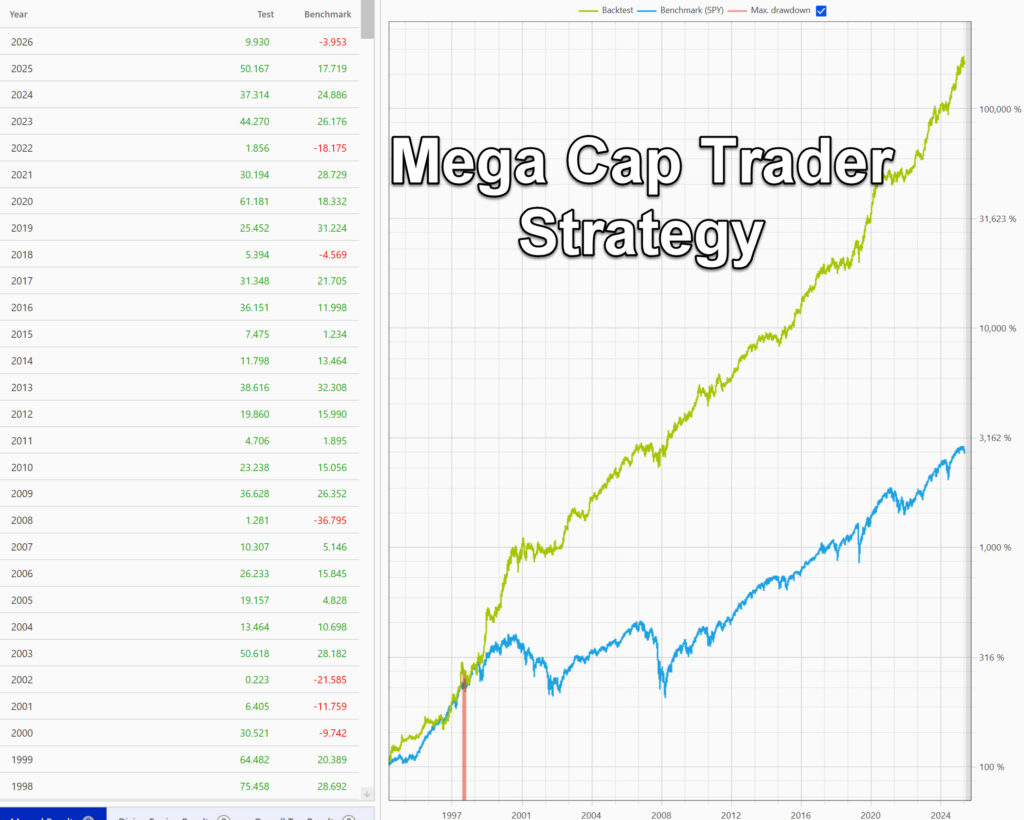
The 5,088 trades and 33 years of history are from my Mega Cap Trader strategy.
When I applied machine learning to reverse-engineer the stock market, it did not spit out 12 complicated indicators and some magical hidden pattern.
It whittled the process down to just a couple of trading rules.
Simple rules.
But extremely important rules.
And those rules are backwards to what most traders have been taught.
For example, the books and chart clowns will tell you to buy the 38.2%, 50%, 61.8%, and 78.6% retracement levels, usually measured from the high and low of the past few months, as though those numbers possess some mystical authority over price.
They don’t.
That zone is very often the no-go zone. In fact, if price gets down to that 38.2% level…the trend is already over.
That is where traders get chewed up and spit out. They buy what looks like the “smart” pullback, price chops around in that area, they get stopped out, and then the stock reverses later without them.
In other words, they buy where everybody else has been taught to buy, and because everybody has been taught the same thing, that area becomes crowded, obvious, and vulnerable.
That is backward.
Speaking of getting chewed up and spit out, where you often do want to buy the dip is much lower — when price is at or near the lows of the past couple of months.
Why? Because that is where the fear is. That is where the weak hands are puking out shares.
That is where stops are clustered. That is where the emotional damage is being done. And then when price finally rebounds back into those beloved Fibonacci zones, that is often where you should be thinking much more about the sell than the buy.
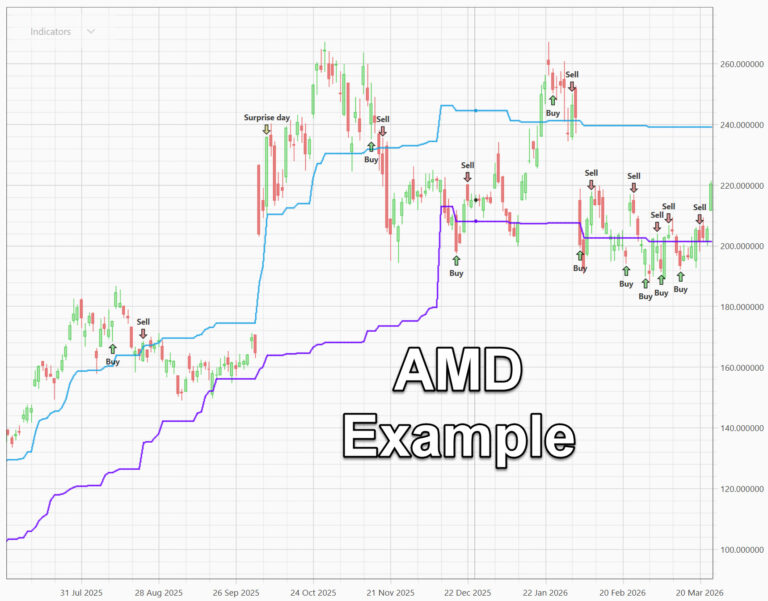
Take a look at this example of recent trades in AMD. Notice how the lower purple often gets broken and then price bounces right back up into the “no go zone.”
You get paid to buy when others are fearful. And then you end up selling right back to these traders when a price reversal is now “confirmed”…only to rinse and repeat over and over.




Responses